
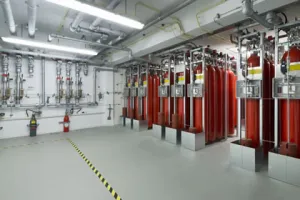
A fire extinguisher is an active fire protection device used to extinguish or control small fires, often in emergency situations. It is not intended for use on an out-of-control fire, such as one which has reached the ceiling, endangers the user (i.e., no escape route, smoke, explosion hazard, etc.), or otherwise requires the expertise of a fire department. Typically, a fire extinguisher consists of a hand-held cylindrical pressure vessel containing an agent which can be discharged to extinguish a fire.
A fire extinguisher is a vital active fire protection device designed to combat small, incipient-stage fires before they escalate into larger, uncontrollable hazards. It serves as a first line of defense in emergency fire situations, enabling trained individuals to quickly respond and potentially prevent widespread damage.
Fire extinguishers are not intended for use on large fires that have spread beyond the point of safe control, such as fires that:
Reach ceilings or structural elements,
Obstruct escape routes,
Generate heavy smoke, or
Pose risks of explosion or toxic exposure.
Typically, a fire extinguisher is a hand-held, pressurized cylinder filled with a fire-suppressing agent such as:
Water or foam (for Class A fires),
Carbon dioxide (CO₂) (for electrical and flammable liquid fires),
Dry chemical powder (multi-purpose, for Classes A, B, and C), or
Wet chemical agents (for kitchen and oil fires – Class K/F).
Fire extinguishers are classified by fire type (A, B, C, D, K/F) and must be chosen, placed, and maintained according to the risks present in the environment — whether in offices, homes, vehicles, factories, or kitchens.
Regular inspection, servicing, and training are essential to ensure fire extinguishers function effectively during emergencies. When used promptly and correctly, they can save lives, reduce property loss, and prevent fire escalation before professional responders arrive.